
Grief & Loss Support
When Life Changes in Ways You Never Expected
Grief is one of the deepest and most personal experiences a person can go through.
Whether you have lost a loved one, a relationship, a pregnancy, a career, your health, or a future you once imagined, grief can leave you feeling as though the ground beneath your feet is no longer stable.
Life may continue around you, yet internally everything feels different.
If you are struggling with grief or loss, I want you to know that what you are experiencing is not a weakness, a failure, or something you simply need to "get over."
Grief is a natural response to losing something that mattered.
What Is Grief?
Grief is a natural response to loss.
While many people associate grief with death, grief can also follow the loss of a relationship, a job, a dream, a future we imagined, our health, or a significant life change.
Grief hurts because something important mattered.
Alongside the loss itself, people are often grieving the version of themselves that existed before the loss and the sense of safety, certainty, or connection that has now changed.
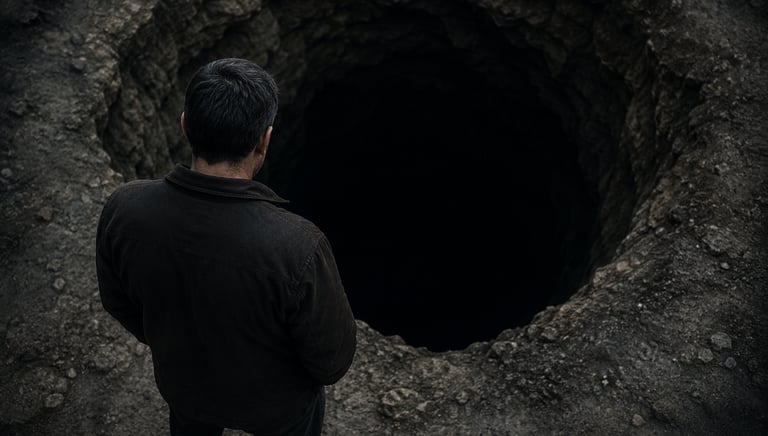
Many people describe grief as carrying a hole inside them, a space where love, familiarity, and meaning once lived.
Although painful, grief is not a sign that something is wrong with you.
It is often a reflection of love, attachment, and the significance of what has been lost.
What Does Grief Feel Like?
Grief has many different expressions and no two people experience it in exactly the same way.
For some it arrives in waves.
For others it feels constant.
It can move slowly, quickly, chaotically, or in ways that make no sense at all.
People often describe:
Sleepless nights
Fear and dread
Feeling overwhelmed
Anger at themselves, others, life, or even God
Numbness and emotional shutdown
Forgetfulness
Difficulty concentrating
Feeling disconnected from the world around them
Crying constantly or being unable to cry at all
A sense that life will never feel normal again
Grief can make everyday tasks feel strangely difficult.
You may find yourself standing in a shop, speaking to people, paying bills, or going through the motions of life while carrying an invisible weight that nobody else can see.
Many people feel as though they are holding two versions of themselves at the same time.
The person they were before the loss and the person who is slowly emerging afterwards.
The relationship has changed.
The future has changed.
Life feels different.
It is not uncommon to feel as though the ground beneath you is no longer stable, leaving you wondering who you are and how to move forward.
Will Grief Ever Get Better?
One of the most common questions people ask is whether grief will ever get better.
In my experience, grief is not something we simply get over.
Grief represents change, often one of the most significant changes a person will ever experience.
Whether the loss is a loved one, a relationship, a career, a future we imagined, or a role that formed part of our identity, grief asks us to adapt to a reality we never expected.
The future we thought we were walking towards has changed.
The person we were before the loss has changed.
Naturally, this can leave us wondering who we are now and how we move forward.
I do not believe there is a cure for grief.
There is no quick fix or bandage that removes the pain of losing something meaningful.
What I do believe is that our relationship with grief can change.
Over time, people often discover they are becoming someone who can carry grief differently. The pain no longer dominates every moment. The loss remains important, but it begins to sit alongside life rather than consuming it.
It becomes less about getting over grief and more about becoming the person who can sit alongside grief without collapsing beneath its weight.
Grief remains part of the story, but it no longer has to be the whole story.
There Is No Normal Way To Grieve
One of the most important things I want people to know is that there is no normal way to grieve.
Your grief is as personal as your fingerprint.
What you are feeling may not feel normal to you, but that does not mean it is wrong.
Grief can be messy, confusing, contradictory, and unpredictable.
Some days may feel manageable, while others can feel overwhelming.
One of the most painful experiences for many grieving people is not the grief itself, but feeling misunderstood by others.
Friends and family often want to help, but grief can make people uncomfortable.
Sometimes people minimise the loss, avoid difficult conversations, offer advice too quickly, or simply disappear because they do not know what to say.
When this happens, many grieving people begin to wonder if there is something wrong with them.
In my experience, this is rarely a reflection of the grieving person.
More often, it reflects another person's difficulty sitting alongside pain that cannot be fixed.
What you are feeling is normal for grief, even if it feels unfamiliar to you.
How I Work With Grief
I work alongside you as you develop a new relationship with yourself, the version of you that exists after the loss.
Together we create a safe space to explore not only the parts of grief that feel acceptable to talk about, but also the unspoken parts that often remain hidden.
The anger.
The guilt.
The confusion.
The fear.
The resentment.
The relief.
The longing.
The questions that can feel difficult to share with others.
There is no pressure to go anywhere before you are ready.
My role is not to rush your grief or fix it.
My role is to gently guide you towards a place where you can safely hold the loss, understand its impact on your life, and begin rebuilding your relationship with yourself.
In time, many people find that while the grief remains important, life slowly begins to return.
Not because they have forgotten what they lost, but because they have found a way to carry it differently.
What Progress Can Look Like
Progress in grief is rarely about forgetting.
It is not about moving on and pretending the loss never happened.
Instead, progress often looks like:
Feeling less overwhelmed by the intensity of emotions
Being able to remember without collapsing
Feeling connected to life again
Experiencing moments of joy without guilt
Developing a new sense of identity
Rebuilding confidence in the future
Feeling more present with the people who are still here
Carrying the loss rather than being consumed by it
Over time, many people discover that the relationship with what they have lost changes.
The grief remains.
The love remains.
The memories remain.
Yet life slowly begins to expand around them once again.
Take The First Step
Grief can feel incredibly lonely, even when surrounded by people.
You do not have to carry it alone.
If you are navigating loss and would like a compassionate, supportive space to explore your experience, I invite you to get in touch.
Together we can create room for your grief, honour what has been lost, and help you find your way back into life at your own pace.



Get in touch


Call
07841010092
© 2026. All rights reserved.
Online Hypnotherapy and Talking Therapy for Anxiety, Trauma, Grief and Personal Growth Across the UK
Grief and Loss Blog